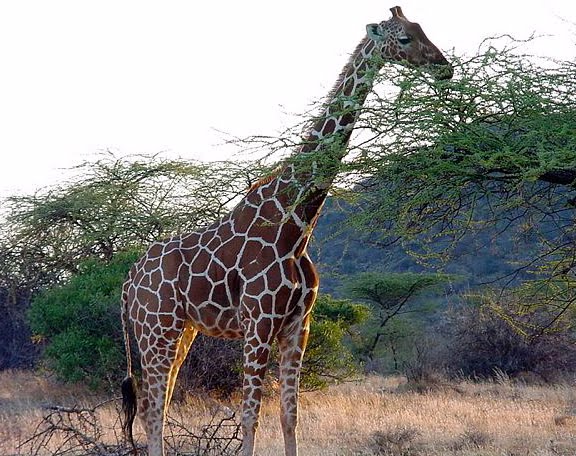
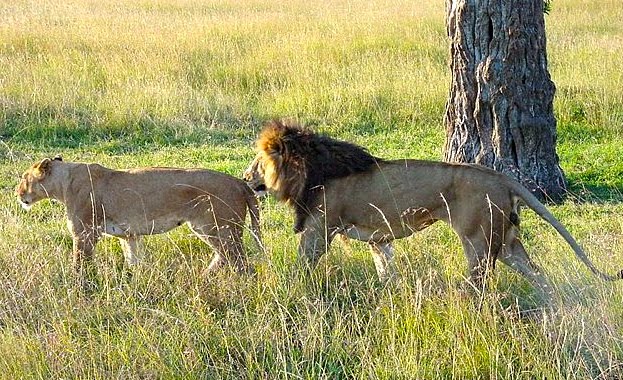
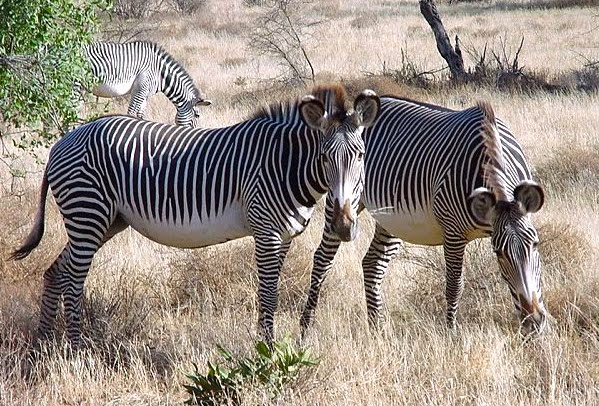
.jpg)
 If you've been on Safari in Kenya, you probably had your picture taken here at Nanyuki.
It's a popular pit stop between camps, complete with a shop where you can pick up all the souvenirs you need.
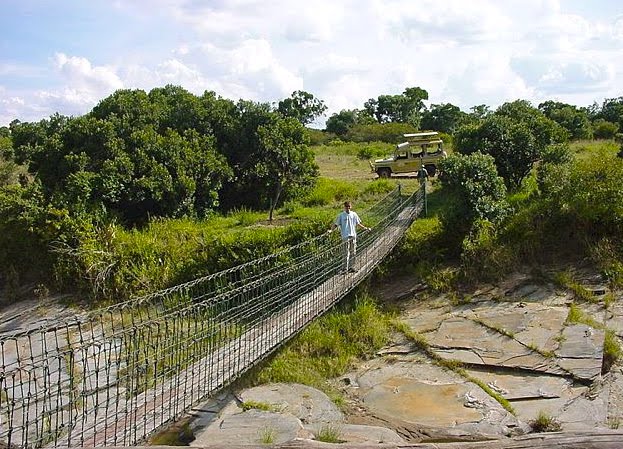 Herman's Indiana Jones moment (less the hat).
 On the way to the Blixen compound in Nairobi we stopped to feed the giraffes at the Nairobi Giraffe Center. We were told not to tease them with the Purina Giraffe Chow we were given to feed them with. Just place some pellets in the palm of your hand and reach out to them. They will gently lap them off your palm leaving all kinds of slime for you to wipe off. But Alan had to tease them, holding pellets with a closed fist. He was swiftly met with a Giraffe head-butt, knocking him to the ground.
 We began our twenty day, seven camp safari in East Africa in Nairobi. The city is somewhat of a chaotic mess but much of it is only on the surface. After a night in a posh hotel in the middle of the city we made our way to our first safari destination.
 Masai are often hired by the camps to guard against roving animals. Never mind that humans are the ones encroaching on their graze lands.
 Safaris in East and South Africa are pretty well organized. The infrastructure for safaris has been laid down and fine tuned through the years. A well know saying is "no problem". If there is a glitch, and there usually is, things will be remedied swiftly.
Your car is not here. No Problem. I'll call and they will send another car.
The airport runway is full of wild animals. No Problem. We'll buzz the runway a couple of times with our plane and they will scatter off.
 A tented accommodation in the "jungles of Africa". Sounds rough and primitive but far from it. This tent had regular beds, running water, a walk thru shower, and a cast iron bath tub on the attached deck.
 We were encouraged to leave the flaps on the tent open during the night but we said no thanks. Our neighbors did. No rouge elephants. Only a few stray bats came flying in.
 Our Safaris in East Africa capped off an eight month trip for us covering forty destinations in thirty countries. It remains the greatest trip of our lives.