Showing posts with label Kuala Lumpur. Show all posts

Sunday, February 10, 2013

Happy Chinese New Year


Happy Chinese New Year

It's the Year Of The Snake and both Alan and myself (Herman) were born during the Snake year so we're hoping for a great year.


We're celebrating as we did two years ago in the Malaysian capital of Kuala Lumpur.
The city hasn't changed much in two years.


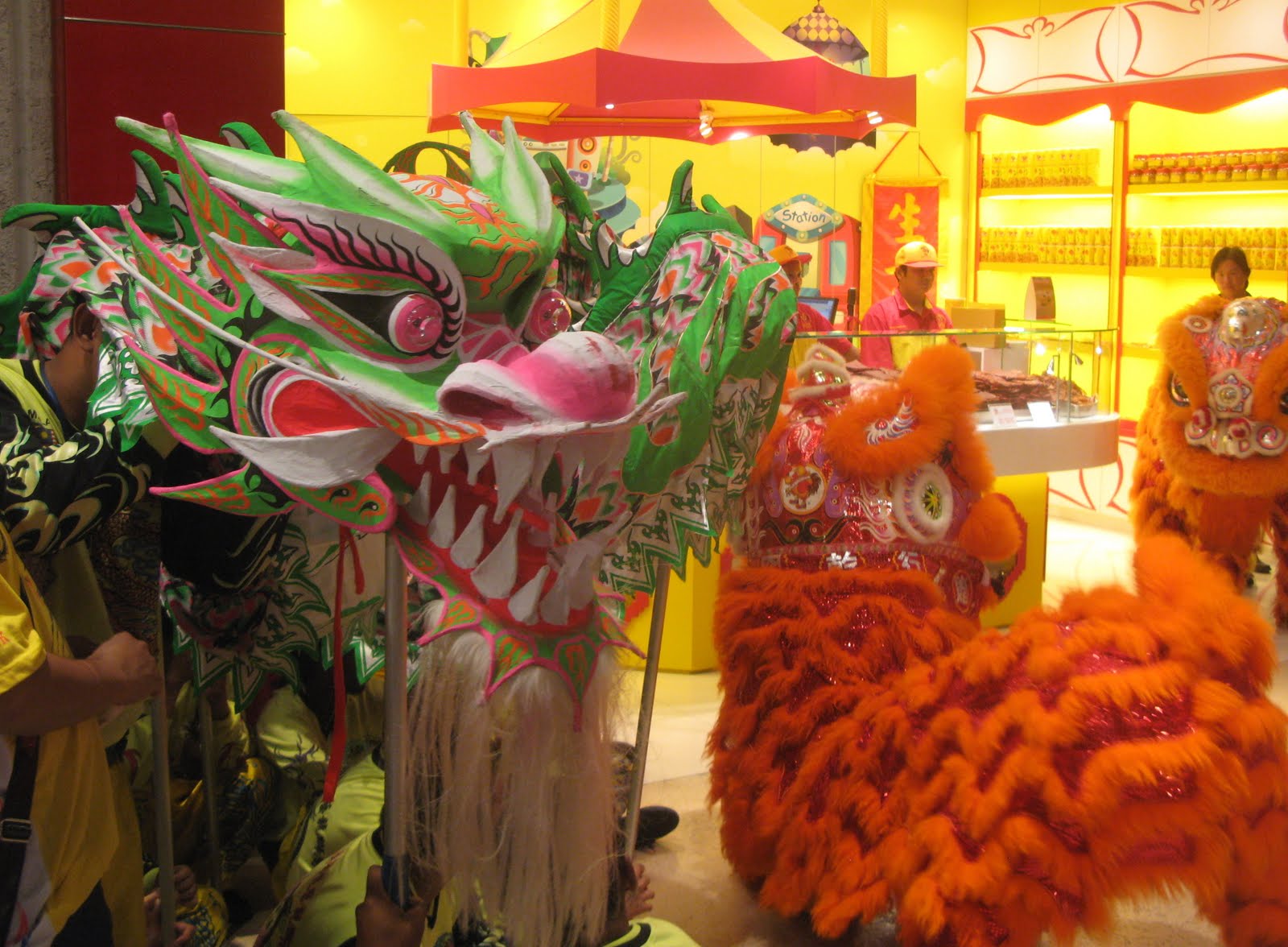
Malaysia has some of the best Lion Dancers in the World and they will seldom disappoint.
The only disappointment was that we didn't see nearly as many Lion Dancers as we saw two years ago.
But nonetheless KL is a great eating town and we did our fair share of it.


We arrived from Chiang Mai on Chinese New Years Eve and our hotel in the Bukit Bintang area was charming but right in the middle of where a huge party was going on.
There was non-stop music, firecrackers, lion dancers, and some very bad karaoke going late into the night.

Thursday, March 24, 2011

What is Happening to KL?

The Petronas Towers put Kuala Lumpur on the 21st century map. The twin towers were the tallest buildings in the world between 1998 and 2004 when it was surpassed by Taipei 101. They remain the tallest twin buildings in the world today.

Building in many of the major cities of Asia has become a boom and in KL the massiveness of the Petronas Towers is slowly being lessened by buildings sprouting up all around them.

The Satay Truck.

Malls are popping up more and more around the central business areas, and they are packed with shoppers.

Some complain that KL is slowly but surely going down the same path as Singapore with glitzy malls. Hopefully this will not be the case. Yes, there are malls in KL but nowhere near what Singapore's Orchard Road has become.
KL is becoming a much more modern city. It's people are multi-ethnic, diverse, and progressive.

Malaysia is a country where Muslims are a majority. Not specifically in KL where non-muslim ethnic Chinese are the majority. But everyone gets along together here.


Bukit Bintang is a little like Times Square at night.


Chinatown KL has turned into what many Chinatowns have evolved into; street markets catering to tourists. Petaling Street is now a vast array of t-shirt and knock-off vendors but behind the scenes and in the cracks are still signs of Old Chinatown. You just have to look a little harder.


Tuesday, February 8, 2011

Eating Chinese in Kuala Lumpur

Jalan Alor in the vibrant Bukit Bintnag neighborhood.

Food stall in Chinatown (above) and Fruit stand on Petaling St. (below)

We've been eating almost non-stop since arriving here in Kuala Lumpur. I don't want to sound like a Cantonese foodie snob but we do love to eat Chinese food and Cantonese in particular.
The range and choices are incredible here and its all very good.

Sure there's Tony Roma's, Pizza Hut, Krispy Creme, and KFC here but we don't eat that stuff back home so why would we do so here.

The Malaysian and Chinese options are so plentiful you have to try as much as you can while visiting. There's everything from Herbal Chicken clay pots, to Portuguese grilled fish, to durian custard tarts, to bamboo charcoal bread. There's even something called snowflake soup.

Jook, or rice porridge for breakfast, brunch, lunch, or dinner. I'm having raw fish, Alan's having bitter melon and pork. Dim Sum accompaniment.

If you're Cantonese, like I am, you probably love tofu fah. Its a soft tofu custard usually served warm with syrup. The best place for it is this little stand on Petaling Street in Chinatown. The price is twice as much and half as good anywhere else.

Fish is very popular in Malaysia and its all very good. This is Stingray cooked with Malaysian okra in a yummy sauce.

This particular beef noodle soup has been around for over 75 years in KL. It's now located in the basement food mall of Lot 10 in Bukit Bintang. The soup with beef balls, fresh beef and trip go into the bowl of noodles with the dark heavy bean sauce. It's incredible to say the least and a must try when in KL. This particular set meal which includes a veg and tea is $2.50.

Hokkien noodles. Very popular and found everywhere.

Nam Heong is sworn to have the best Hainanese Chicken Rice in Kuala Lumpur. Located one street over from the tourist market Petaling Street in Chinatown, its a must stop for lovers of simple Cantonese food.


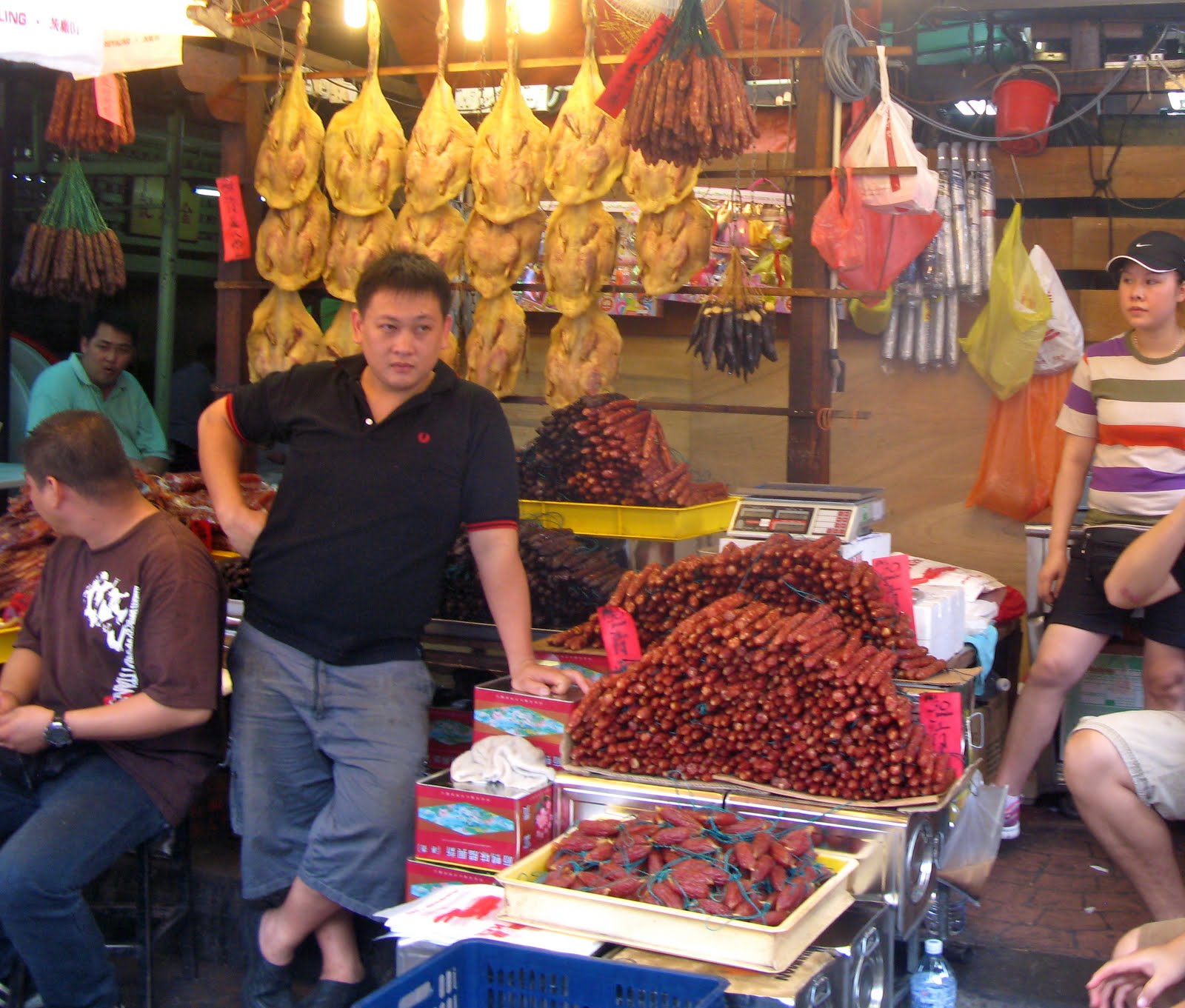
Alan posing outside Syarikat Makanan Salai Kiew Brothers.

Tofu, lamb curry with rice and seaweed soup. About $2.50.

Malaysia seems to be a popular place for eating durian. I'm not sure if its the higher quality available here, as its claimed to be, or just the sheer number of durian eating people here in Kuala Lumpur.
In any case, durian stands are strategically located throughout the city, mostly where people congregate and eat outdoors. Your nose will lead you to a nearby stand.

Its Chinese New Year so everyone's getting into the spirit, so why not Pizza Hut.
A pizza in the shape of a Chinese coin. What good luck.

Monday, February 7, 2011

More Lion Dancing

The Chinese New Year celebration usually goes on for two weeks and in many countries it culminates in a huge dragon infested parade. It's no different here in Kuala Lumpur.
Part of the main celebrations surrounding the New Lunar Year are Lion Dances.

There are essentially two types of Lion Dances.
Northern Style, where Lions typically dance using the full body of the lion with jumping and rolling on the floor maneuvers, and Southern Style, where there is more concentration on specific movements of the head and body to show its behavior.

Southern Style is what we see most in Western countries and those associated with Cantonese people. All the pictures here are of Southern Style Lions.

The Origin of the Lion Dance differs depending on what you read and who you listen to.
Many believe it originated with a beast that appeared on New Years to attack and destroy the crops of farmers in the villages. The creature was named "Nien", meaning "year" in Chinese. Gongs and weapons were used to scare it off but it reappeared the following year. Villagers then created an imitation beast with bamboo and colorful paper and used the accompaniment of gongs, drums, and cymbals, to scare it off.

Today, lion dancing is performed on many auspicious occasions such as the dedication of a new building office or store as its believed to bring good fortune and wealth. Its always used during the Chinese Lunar New Year to beckon in a prosperous New Year.

The Southern Lion today is known to be a playful animal with an exaggerated head, huge eyes, and decorated with colorful sequins and lamb or rabbit fur.
Its movements are deliberate and accompanied by specific beats from the drum, gong, and cymbal. Different stances are performed to mimic sleep, waking, drunkenness, happiness, fright, merriment, anger, and suspicion.

Lion Dancing has evolved significantly over the years. Nowhere has is been perfected more in recent years than in Malaysia. There are huge international competitions held yearly in Malaysia and many of the top honors go to the Malaysians. And its not just home street advantage. The huge Chinese population in Malaysia, and particularly in Kuala Lumpur, has nurtured and developed the art of lion dancing beyond the typical.
Lion dance troupes are usually associated with martial arts groups, predominately Kung-Fu. In the 1950s and 60s it developed into a gangster-like cult with many of the Kung-Fu studios fighting with with each other. Knives were carried by the lion dancers and street fights materialized when different troupes performed too close to one another. Some acrobatic steps were even developed to kick and attack other lion dancers. Things got so bad in Hong Kong that the authorities had to ban Lion Dancing for a while. Today its highly regulated in Hong Kong and troupes must attain permits to perform.

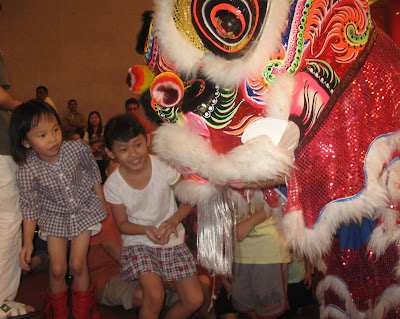
Give and receive.
Lucky red envelopes are given to lions (through the mouth to the dancer) and in return gifts, such as oranges or a lucky coin, may be given by the lion.

Here are a mess of short lion dancing videos.
Most were taken on the same day at various locations throughout the city of KL.
Sorry about the quality of some of them but for some reason Goog will only allow me to post them at this lower resolution.


Lion Pole Dancing .
A very popular routine here in KL.


The Pavilion Shopping Complex is undoubtedly the flashiest Mall in this city where malls seem to be doubling every every five years.
Lion dancing performances have been happening daily for the last week.


Its easy to see why the Malaysian Lion dancers consistently win competitions.


Lion dancers at one of the Syarikat Makanan Salai Kiew Brothers outlets.
SMSKB is reputed to be the best smoked, dried meat in Kuala Lumpur.
Sometimes referred to as barbequed meat, its a little like jerky only thicker and more tender.
Chicken and Pork are the most popular and their main outlet in Chinatown will usually have long lines at opening time when freshly grill-dried meats are available.

The Lion Dancing at this particular outlet of SMSKB at the Pavilion lasted almost an hour.
Plenty long for a whole mess of good fortune for the New Year.

Thursday, February 3, 2011

Gung Hay Fat Choy KL

Gung Hay Fat Choy from Kuala Lumpur.
It's Chinese New Year and it's certainly celebrated here in Kuala Lumpur where roughly 43% of the 1.8 million people are Chinese.
The Chinese were amongst the earliest immigrants to settle in KL but many came originally to work lower end jobs. Most originated from Guangdong Province and speak Cantonese but Chinese immigrants also migrated from Fujian and Hokkien.
Today, many of the Chinese in KL are English-educated and speak primarily English with some Chinese dialects. A majority of them are involved with the corporate and commercial business sector of Malaysia.


Kuan Ti Temple is one of the two main Chinese Temples in Chinatown.
A Taoist Temple also known as Guan Ti or Kwong Siew Temple, it's dedicated to Kuan Ti, the God of Righteousness.
The temple houses a long knife (Guan Dao) brought from China more than 100 years ago.
Legend has it that anyone who touches the knife will receive its blessings, whatever that means.


Lion pole dancing.


Welcome Year of the Rabbit.
You're a rabbit if you were born on or after the Chinese Lunar New Year in 1915, 1927, 1939, 1951, 1963, 1975, 1987, 1999, or 2011.
Rabbits are generally gentle, calm, loving, and ambitious. They're good listeners, kind, and sweet by nature so they're often sought out as good trusted friends. They also have a good eye for art, design, and fashion (who doesn't know a rabbit thats not a flashy dresser?).
Rabbits are most compatible with Dogs, Sheep, and Pigs (not in this order).